 TurtleGit for Mac
Settings completion and owned close
The context/page handoff continuation connects accepted asynchronous close to the next requested Settings visit, including replacement and clean-Quit ownership boundaries.
Source comparison uses pinned TortoiseGit
7338078f8ddd924b8cddee35f512f2286072136d. This is a connected Settings
completion-family review, not certification of every Settings page or of the
whole application.
Source behavior
src/TortoiseProc/Settings/Settings.h:64 derives CSettings from
CTreePropSheet; src/Utils/TreePropSheet/TreePropSheet.h:77 derives that class
from CPropertySheet. Settings.cpp supplies page construction, initial
selection, Help and restart handling. It does not define separate
OnOK, OnCancel or OnApply implementations. The ordinary property-sheet
completion contract is inherited: Apply saves modified pages without closing,
OK applies before closing, and Cancel discards unapplied edits. A page that
refuses Apply prevents successful completion. This is not a global rollback of
pages that already saved.
Concrete page evidence includes:
Settings/SetDialogs.cpp:291–329:OnApplyreads the controls, stores its settings, clears its modified flag and delegates to the base implementation.Settings/SettingGitConfig.cpp:288–299:OnApplyreturns false ifSafeDatafails; it clears the save-needed/modified flags only after successful saving.Settings/Settings.cpp:100–143: repository-dependent pages join the same property sheet as global pages; Remote belongs to the captured repository.Settings/Settings.cpp:151–173: restart/cache refresh is a separate consequence of saved settings, rather than evidence that all edits were accepted.
The Mac adaptation additionally owns asynchronous reads, writes, native sheets and child-window retirement. A successful Settings close must wait for those owned lifetimes rather than be lost because a page began retiring immediately after Apply. Retirement must not save an unapplied draft.
Connected implementation scope
The implementation covers SettingsNavigationController and the shared
SettingsTransaction completion path, retaining SettingsSheetController's
existing owned sheet-release contract:
- Keep Apply, OK and Cancel enabled states consistent with the actual transaction, page operations and owned children. Apply saves without closing; successful OK retains its close request through asynchronous Remote retirement and completes once the owner is safe to release.
- Keep validation or save failures open on the relevant page, preserving editable drafts and already successful writes. Do not reinterpret a failed final page as a completed OK operation.
- Discard unapplied changes on Cancel or ordinary native close. Preserve changes already committed through Apply or an immediate page operation.
- Before successful Apply/OK completion, refuse stale replies after repository or participant replacement. A final awaited participant must still belong to the same registration when its reply returns. Retirement and owner closure also invalidate unfinished work.
- Retire only the children owned by this Settings instance, wait for actual sheet detachment, and deliver its completion callback once. After Cancel or successful OK accepts a terminal close intent, freeze the original Settings window and pages. A later change to the main workspace may finish closing that original captured window; it must not adopt a replacement page or close a new controller or window. The pending close cannot become a later Settings operation.
The sidebar, page contents, source icons, preference scope and existing per-page Git actions stay in their existing families. This batch concerns their shared completion and lifetime behavior.
Meaning of the sheet callback
SettingsSheetController.onClosed(Bool) reports an ordinary, non-retired
Settings sheet release with its parent available. The Boolean is not an
“OK saved everything” receipt. Ordinary Cancel can return true: a caller may
need to reread settings that were applied earlier in the same visit.
Rebase, Stash and Merge identity callers use return from Settings to recheck identity; Commit and the shared Notes identity session also perform their own checks. Closing Settings never certifies that Git author/committer data is valid. Parent retirement, cancellation and failed presentation must not resume work as an ordinary accepted return.
Validation status and remaining limits
Eight distinct native case/engine pairs pass cumulatively across the recorded
attempts: Close, Apply, Ownership and Layout with system and bundled Git.
Receiver: docs/qa/settings-completion-native-2026-10-24.swift;
runner: scripts/test-settings-completion.py. This is local native evidence,
not a complete hosted CI or signed acceptance result.
The initial final Layout receiver emitted an Illegal NSTableView data source
diagnostic after its PASS message. The repair detaches Remote's data source
before its delegate, then disables and clears the retired table's rows/actions.
The Close case now asserts that actual cached-table retirement. The affected
Debug build exited zero, and focused Close/Layout checks with both Git engines
passed four case/engine pairs without that diagnostic. Earlier passes are
retained; the full eight-pair group was not repeated after this focused repair.
The four captures show active UI and are unchanged by the retirement repair.
The receiver uses actual footer targets, Escape-button dispatch and native window close paths. It covers cached Remote retirement, unapplied draft discard, a real Remote URL Apply that stays open, validation/save failures followed by successful OK, owned child sheets and held Git reads, retired and replacement owners, original-delegate refusal, final participant replacement during awaited Apply, and forced retirement during Apply. Private repositories, preference suites and owned helper cleanup keep these checks isolated. These synthetic events do not prove physical keyboard or accessibility acceptance.
The parent inspected four actual WindowServer captures: full Git and Remote Settings windows in light and dark appearance, with legible complete footers and a native two-row Remote list. These are Git light, Git dark, Remote light and Remote dark.
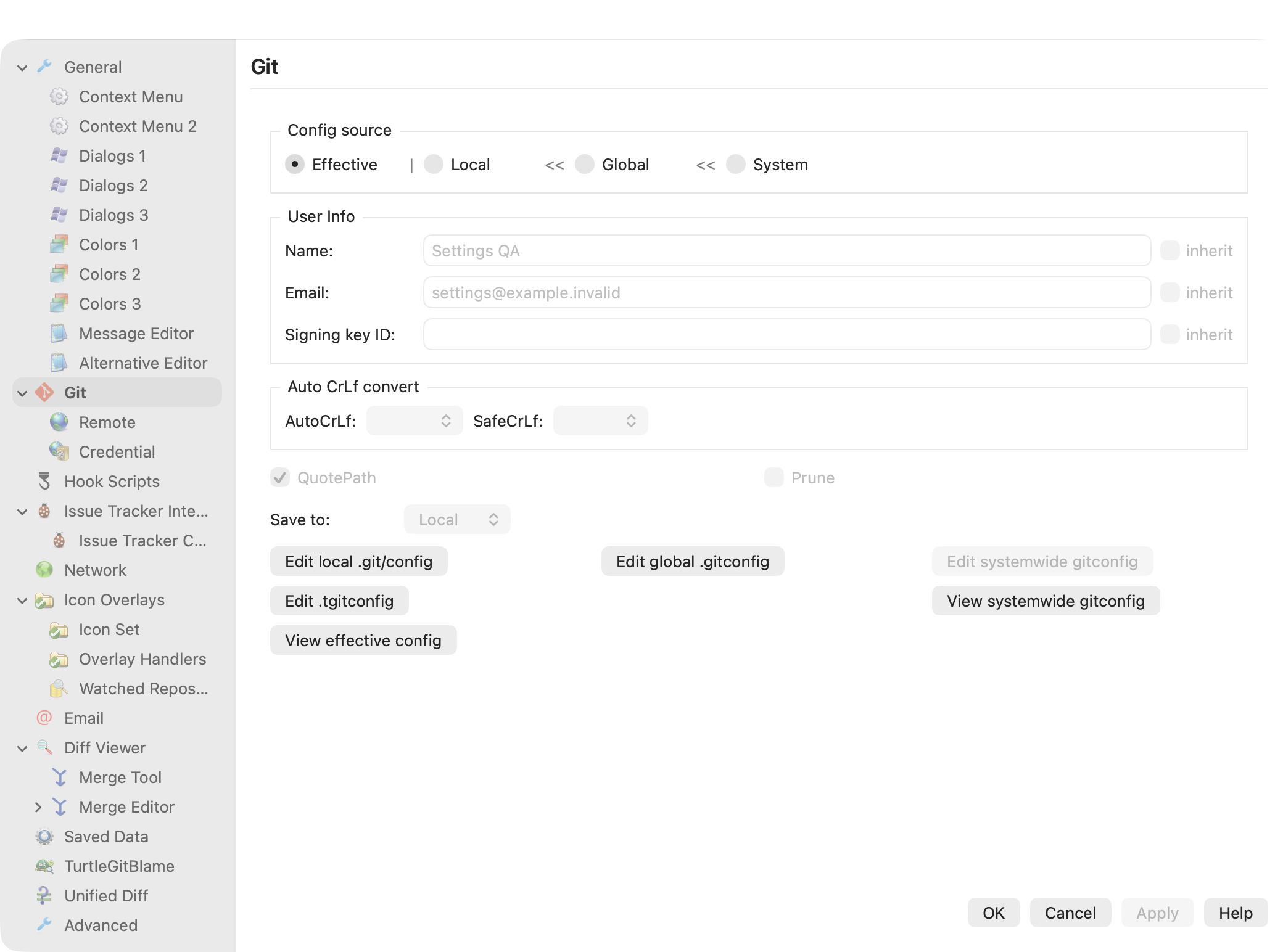
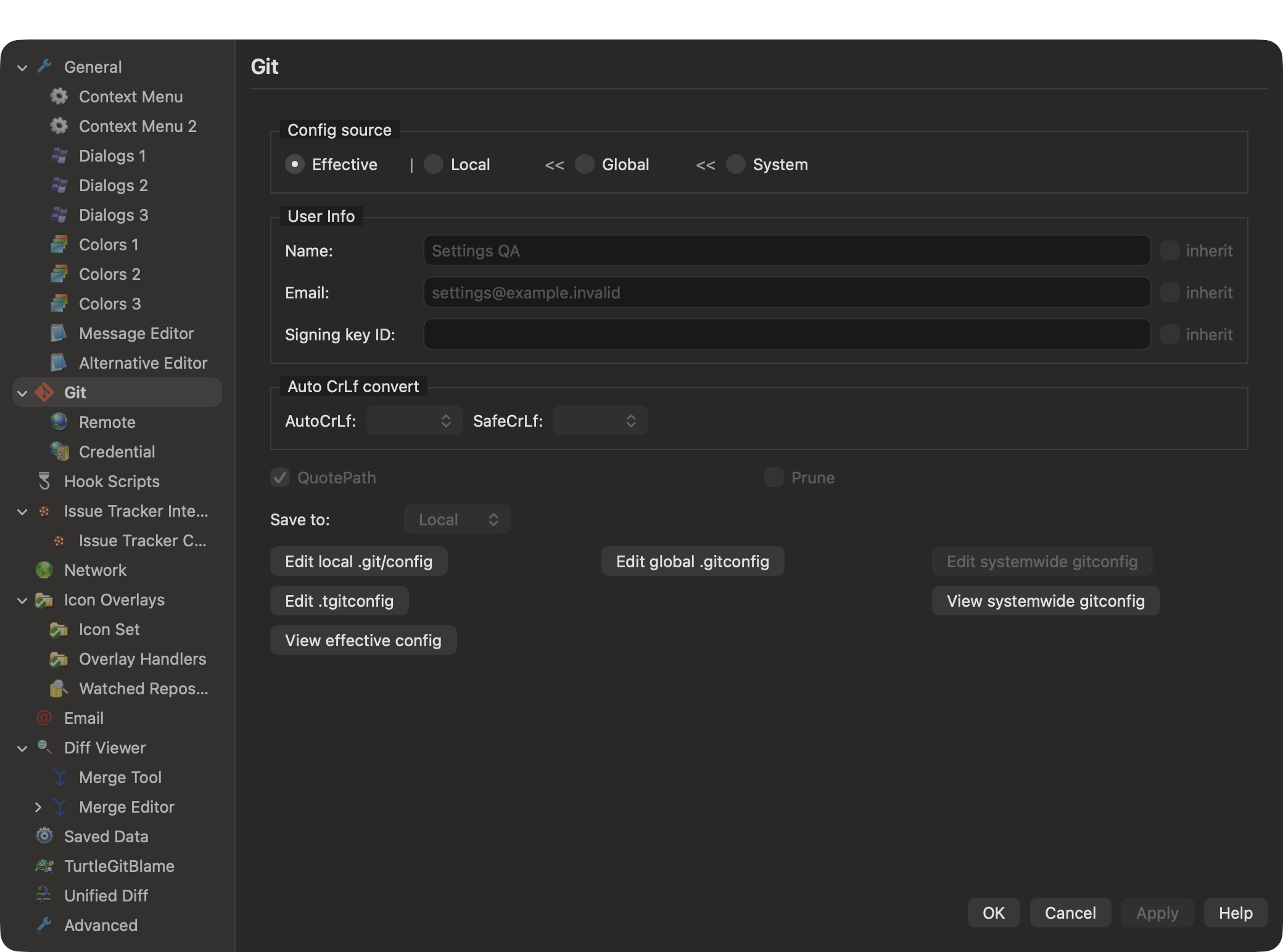
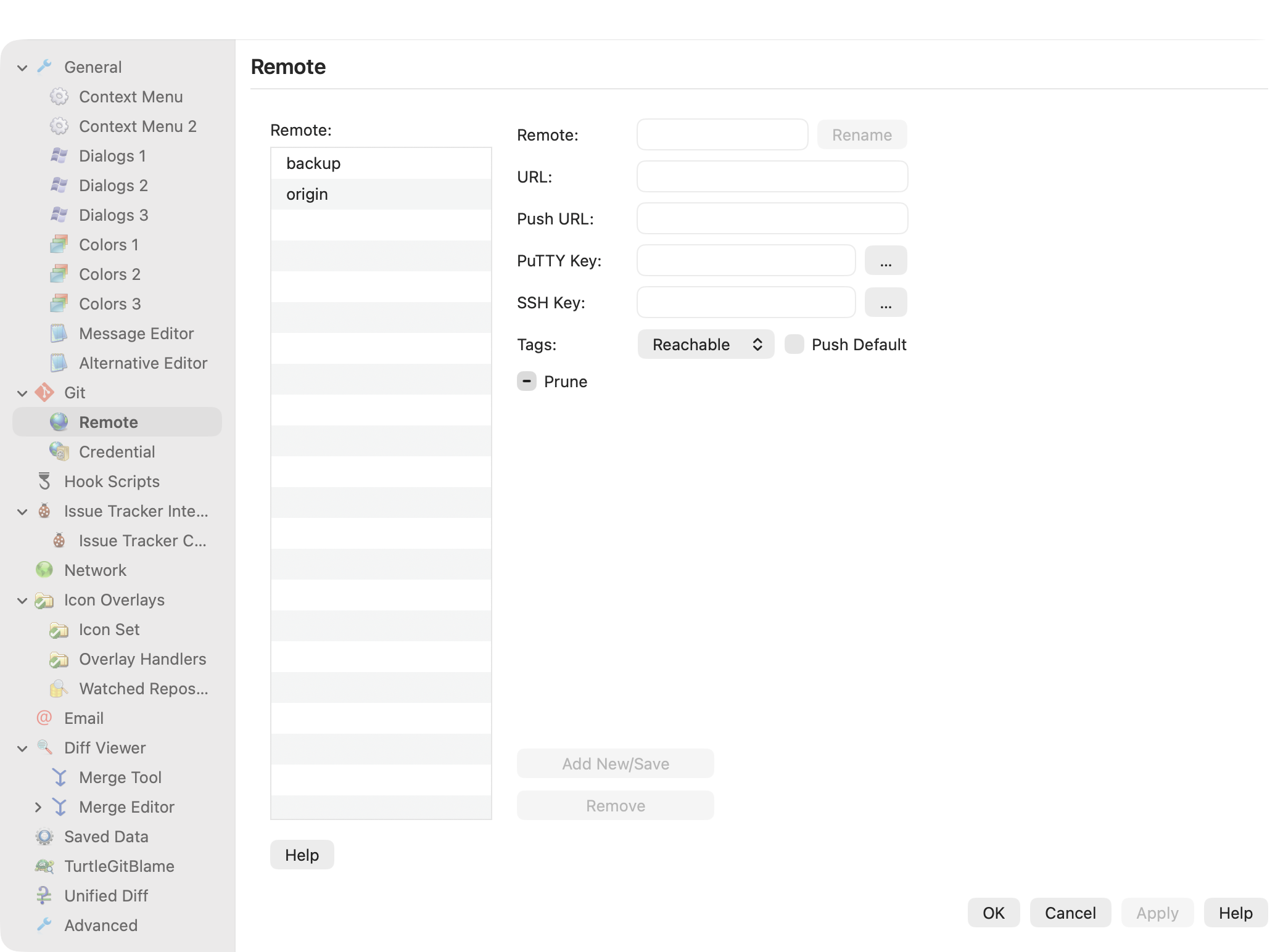
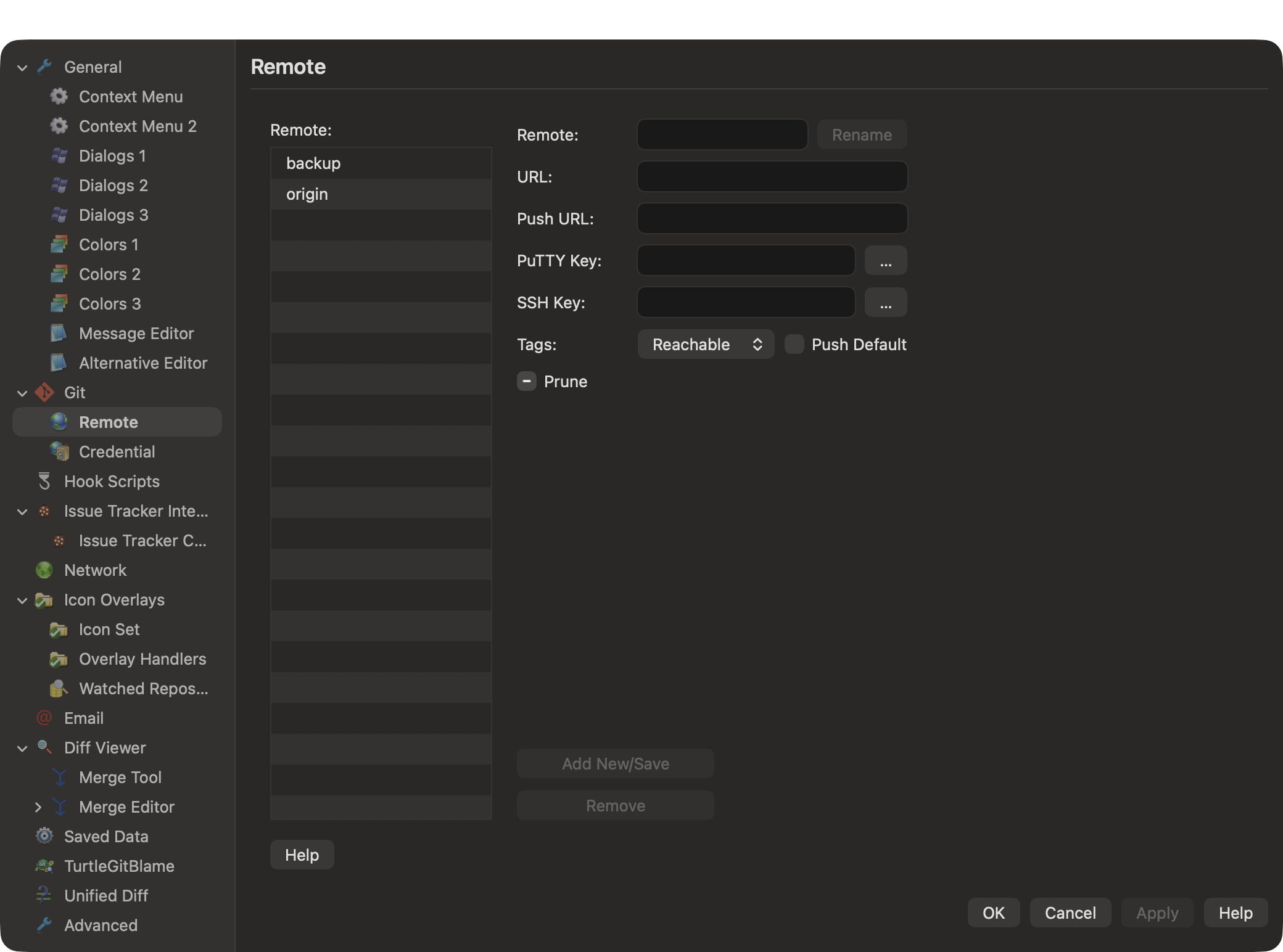
Optional --captures DIR records those windows during the first Git engine's
Layout case. Other receiver windows remain invisible or offscreen; the deliberate
capture window is restored immediately afterward. These images do not certify
all pages, display configurations or physical interactions.
Physical keyboard/VoiceOver behavior, every page's independent validation and Git operation, public-window placement, signed distribution and all upstream Settings layouts remain separate acceptance work. Partial page writes are retained after later failure; neither source nor this native transaction promises an atomic settings rollback.